Every time the courts release another devastating ruling on school arson attacks in Kenya, the public conversation takes a predictable, lazy route. We see panel discussions and opinion pieces rushing to demand the return of the cane, shouting about “spoiled children” and a “lack of discipline.”
But let’s expose a glaring historical reality that our society has conveniently forgotten: corporal punishment is already a direct violation of our legal framework.
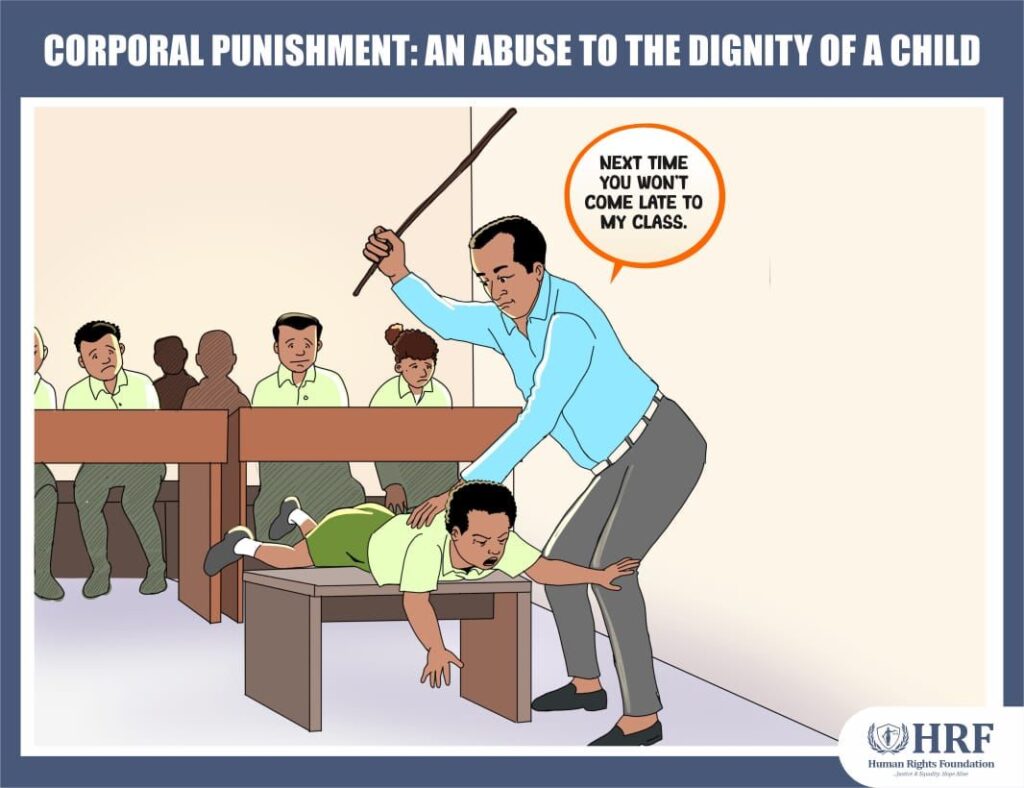
The Ministry of Education officially banned caning in 2001. Article 29 of the Constitution explicitly guarantees freedom from all forms of physical violence, and the Children Act of 2022 formally stripped away any remaining legal justification for physical correction. Yet, despite decades of clear legal prohibition, the hard truth is that many schools never actually stopped caning our children.
The Myth of “I Turned Out Fine”
We frequently hear parents defend the cane by saying: “We were beaten when we were young, and nothing happened to us. We turned out just fine.”
But as a practicing clinical therapist, I see the hidden cost of that lie every single day behind closed doors. I have sat across from countless adults who are deeply, psychologically harmed by the very childhood violence they call “discipline.”
They did not turn out fine. They turned out to be adults living with severe anxiety, broken self-esteem, deep-seated trauma, and a total inability to manage their emotions without lashing out or shutting down entirely. Under local and international children’s rights laws, caning is not correction—it is outright abuse.
The Core Issue: Training the Wrong Thing
A wise headteacher once told me: “Every time a child does something wrong, it is an opportunity to train them into doing the right thing.”
But what are we actually training them to do when we use the cane? We are not teaching them emotional regulation, accountability, or discipline. We are teaching them that might makes right.
We are equipping them with highly destructive life skills: how to suppress anger until it explodes, how to use violence to solve conflicts, and how to operate out of pure fear. We are actively training them how to be angry adults. When these children graduate and enter the workforce, marriages, and communities, they carry those exact negative skills into the world.
The Toxic Cycle of Mutual Contempt
Caning destroys the foundational bond of education. Because of the ongoing whipping, these children know they are actively “hated” by their handlers. In return, they grow to deeply hate their schools and their teachers.
Respect cannot be beaten into a human being. When you replace respect with physical terror, you create a toxic, two-way street of animosity. The children withdraw, the teachers rule by fear, and the classroom becomes a powder keg.
School unrest is not a random act of malice. It is the predictable, devastating language of children who have been systematically stripped of their voices, their agency, and their dignity.
What We Need to Take Away
This is not the first, second, or even third time we are having this debate in our society. We must break this cycle. What do we want the different people involved to take away from this?
- To the Education System: It is time to step away from the lazy shortcut of the cane. Physical punishment will never fix overcrowded dormitories, poor sanitation, or the severe lack of professional counseling.
- To the Educators: Step away from the cane. You cannot mentor a child you are terrorizing. True discipline is about guidance, not physical submission.
- To the Parents & Communities: We must protect our children’s mental health and defend their legal rights. We need to demand environments that treat our youth as human beings who deserve representation, empathy, and an emotional safety net.
A Shared Responsibility
Ultimately, a school should be a sanctuary, not a processing factory for trauma. When we resort to the cane, we admit that we have run out of words, run out of patience, and run out of better ideas. It means we have failed to do the harder, more necessary work of listening.
If we want a society full of emotionally intelligent, stable, and peaceful adults, we have to start by practicing those exact values with our teenagers today. It is our job to absorb the shocks of life, not pass them down to a generation that doesn’t have the tools to process them.
Let’s stop beating them into submission. Let’s start training them into the right thing. This crosses over to CHID ABUSE.
This article was contributed by a practicing clinical practitioner Ms.Shiibero R. Akatsa with extensive experience evaluating adolescent mental health and community structures locally and abroad.