

We Need a New Conversation Around Marital Separation, and Healing in Africa
When we talk about marriage in Africa, our faces light up. We think of the colorful traditional weddings, the vibrant music, the coming together of two families- celebrated wth our traditions and culture. There is immense pride our communities feel. Marriage is beautifully woven into the very fabric of who we are, and these rich cultural traditions deserve to be preserved, respected, and fully celebrated. But because we hold the institution of marriage in such high esteem, we tend to deal with marital distress in absolute, suffocating silence. The problem isn’t our beautiful traditions—it is what happens after a union faces a crisis. For many of us, especially within the Christian community, the mere thought of a marriage failing feels like an unspeakable sin. So, what happens? We lock the doors, pull the curtains, and suffer in secret. We see many Christians quietly walking through divorce while fleeing the church out of shame, and just as many staying trapped in deeply broken, toxic dynamics because of the heavy stigma carried by our communities. It is time to pull back the curtain. If we truly want to heal African families who are quietly hurting in homes, we have to start telling the truth about what happens when a relationship breaks down, and how we can support the human beings within this sacred space. I speak from personal experience and from having stewarded a divorce care ministry in curches. The Wall of Silence Inside the Church When I was conducting research for my book, An African Woman’s Story of Divorce in Kenya, I wanted to see what kind of support systems churches actually had in place for families going through a breakdown. The initial reactions I got were incredibly telling: nobody really wanted to talk to me. There was a heavy, defensive wall of silence. Church leaders didn’t even want to acknowledge the issue. Why? Because the system carries a massive blind spot. They mistakenly believe that providing emotional and transitional support for a family in crisis is the same thing as promoting or supporting divorce. But also the very word ‘ divorce’ is still unspoken’. Let’s expose that myth right now: Supporting a family through a breakdown is NOT supporting divorce. It is supporting human beings who’d like to experience the compassion and love of God in their times of need. When a church shuts its doors to the reality of ‘marital failure’, it doesn’t stop divorces from happening; it just ensures that its members bleed in silence. By refusing to offer a landing pad for broken families, the church ceases to be a sanctuary and becomes a courtroom. The Trauma We Inherited and the Trap of Abuse Let’s be honest about why many couples find themselves in toxic cycles. In so many cases, the explosive arguments, the cold shoulders, or the control tactics aren’t new—they are generational echoes. Many couples are simply playing out scripts they saw in their original families growing up. We saw our parents fight, we saw our aunts endure, and we unconsciously learned that love must hurt to be real. But what happens when that dysfunction turns into abuse? Whether it is emotional, financial, or physical, the feeling of entrapment is agonizing. You want to leave to save your sanity, but you look at the community, you think of the church, and you feel entirely paralyzed. You are trapped between a system that tells you to “be patient and endure” (Tiisetsa, Hangana, or Uvumilivu) and a reality that is slowly breaking your spirit. Let’s challenge that system right now: enduring abuse is not a spiritual victory. God deeply values your safety, your dignity, and your wholeness. A healthy community cannot be built on broken, terrorized individuals living unde the same roof in the name of marriage. The Forgotten Victims: What About the Children? In the middle of all this adult warfare, there is a heartbreaking truth we have to confront: we are destroying our children. When couples are caught up in the pain, anger, and bitterness of a failing marriage, they often become completely blind to how their fighting impacts the little eyes watching them. We yell, we slam doors, we treat each other with deep contempt, and we completely forget that our children are absorbing every single ounce of that trauma. They are learning how to be anxious, fearful, or angry adults right in our living rooms. Worse yet, look at how our society handles a marital split. It is treated entirely as an adult thing. The parents get lawyers, the aunts and uncles call meetings, the pastors offer counseling for the husband and wife—but there are absolutely no services or considerations for the children. They are left to process the collapse of their entire world completely alone. Because there is no professional or emotional support tailored for them, children often end up being weaponized. It happens all the time in African families: parents start using the children to spy on each other, to pass toxic messages, or as tools to punish the other parent. We force our kids to choose sides, tearing their hearts in two and forcing them to carry adult burdens they were never meant to bear. Redefining the Ending: From Shame to Wholeness Challenging the current stigma does not mean we are against marriage. We love marriage! But we must advocate for truth and health. When a marriage has completely broken down and high risk of violence and emotional and phyisical harm – it can no longer be a place of safety and mutual love, navigating a transition with dignity is not a failure of faith. In fact, shielding your children from a chronically conflicted, toxic home and choosing a peaceful, managed separation is an act of profound love and leadership. Children thrive far better in two separate, peaceful homes than in one war zone. The African church and our broader communities have a beautiful opportunity to evolve. Instead of standing in judgment or hiding behind defensive silence, we can
Read More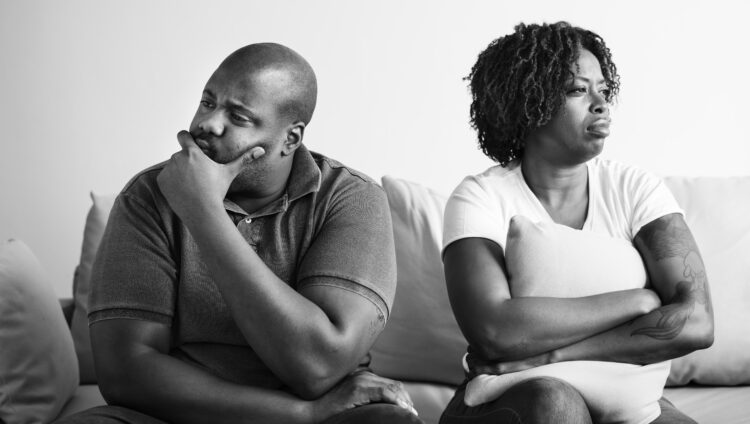
When Marriage Fails: The Shattering Taboo of a Family Breaking Apart
Let’s be honest about the relationships we build. When we get married, we all start with a shared vision of a lifetime together. We build a life, a home, and a family based on promises of safety, love, and mutual respect. But sometimes, over the years, the reality inside the four walls of a home begins to shift. Quietly, slowly, jagged cracks begin to form where there used to be a foundation. We talk a lot in our communities about the tragedy of a family breaking apart. But we rarely have the honesty to talk about the silent tragedy of a family staying together purely for the sake of appearances. When a marriage becomes a place of constant tension, emotional distance, or emotional unsafety rather than a sanctuary of love, the environment changes. Our children stop learning how to see real love; instead, they learn how to survive emotional coldness. To look at that reality in the mirror and decide that maintaining a broken structure is no longer worth the emotional cost requires a rare, shattering form of bravery. The Ultimate Taboo: Hiding Behind the Shame In our society, we can’t even say the word divorce. It is treated as the ultimate taboo, a conversational death sentence that people avoid at all costs. Because the word itself carries such a heavy weight of assumed failure, shame, and judgment, it forces people into absolute hiding. Couples endure years of silent agony, wearing masks in public and pretending everything is perfect, simply because the social consequence of admitting the truth feels too devastating to bear. This taboo doesn’t save marriages; it just forces the suffering underground. It took me eight long, grueling years to finally break through that silence and reach this crossroad. That is eight years of waking up in the dead of night, staring at the ceiling in the dark, and asking myself if there was something—anything—more I could do to save my relationship. It was eight years of trying, hoping, praying, forgiving, and exhausting every single ounce of human energy I possessed to fix what was fundamentally broken between two people. When we are on the outside looking in, it is so easy to judge. We look at someone else’s broken relationship and make comfortable assumptions, whispering to ourselves that it could never happen to us. But life has a humbling way of dismantling our certainties. The truth is simple, and we have to face it: never say never. It can happen to absolutely anyone. By the time someone gets to the point of making this monumental, life-altering decision, they haven’t just given up overnight. They have been thoroughly processed through the mill of relationship distress. Unless you have walked this path yourself, you cannot truly comprehend the sheer magnitude of the pain. It is a unique, exhausting kind of heartbreak. It is the heavy fog of loneliness where you feel entirely invisible, even while standing in the exact same room with the person who was supposed to be your life partner. And underneath that isolation lies the quiet, stinging trauma of betrayal—not just the betrayal of trust, but the shattering of a dream and the loss of the future you built your entire life around. You are faced with the daunting, terrifying task of untangling a shared life, navigating the anxieties of an uncertain future, and carrying the grief of what could have been. Choosing to leave under that immense weight isn’t a sign of weakness. It is a profound act of choosing peace and survival. When the Village Fails: Ubuntu Awry We love to talk about Ubuntu—that beautiful, profound philosophy that “I am because we are.” We lean heavily on the idea of the village raising the child and the community sustaining the family structure. But we need to look at each other clearly and admit where our execution of Ubuntu has fallen deeply awry when relationships begin to fail. When a family appears intact and everything is smooth on the surface, the village is loud, visible, and celebratory. Everyone is there for the milestones. But the moment a relationship enters the dark tunnel of deep distress, the moment the struggles become real, the village too often goes deafeningly silent. The harsh reality is that there is little to no real support when families are going through this catastrophic, life-changing event. Instead of wrapping its arms around suffering individuals and the children involved to offer protection, practical help, and safe spaces to heal without judgment, our community too often retreats into whispers, taking sides, or awkward avoidance. We have weaponized a philosophy of togetherness to force people to suffer in silence, implicitly telling them to endure a toxic or broken dynamic just so the community doesn’t have to feel uncomfortable. True Ubuntu was never about sacrificing human souls or emotional well-being to preserve an empty, broken contract. It is supposed to be about ensuring the village is a place of genuine health, safety, and emotional honesty for every individual within it. When you are going through this, you have to ask yourself: If these spaces don’t offer comfort when I am bleeding out emotionally, why am I letting collective expectations control my peace, my life, and my family’s future? Reclaiming Hope: The Dawn After the Dark Choosing to leave is not a failure of family; sometimes, it is the ultimate reclamation of human dignity. It takes immense courage to look past the silence of a broken village and say one simple, definitive word: Enough. It takes courage to admit you are exhausted, to step away from a dynamic that is breaking you, and to choose authenticity and peace forward. But saying “enough” is not the end of your story—it is the beginning of your healing. The pain, the loneliness, and the betrayal do not have the final say over your life. While the village may go silent, God never does. There is a profound, life-giving truth waiting for you on the other side of this heartbreak:
Read More
Navigating Mental Wellness in the African Context
For many of us growing up in African households, our early education was focused heavily on the visible. We were taught the essentials of physical hygiene—how to brush our teeth, take a bath every day, and keep our surroundings clean. If we fell and broke a leg or suffered from a physical ailment like asthma, we were rushed to the hospital for immediate care. However, when it came to our internal world, the lessons were often very different. Many were raised in environments where crying was met with a “slap down” or being told to “be a man” and “shut up”. Culturally, the default response to psychological pain has often been to suppress it, pushing feelings down because we were taught not to show how we truly feel. The Weight of Unseen Injuries This cultural tendency to “just get on with it” doesn’t mean the pain isn’t there; in reality, we often sustain more psychological injuries than physical ones. We carry the weight of rejection, abuse, failure, and perfectionism. Crucially, many of us overlook loneliness, but it is a significant form of psychological damage that we encounter frequently. Because we aren’t taught to process these experiences, they accumulate into “baggage,” leading us to a point where we eventually “blow up”. In Kenya alone, the impact is stark: the nation ranks as the sixth most depressed in Africa, with depression affecting a staggering 40% of hospital inpatients. These numbers suggest a widespread struggle with coping skills and a lack of life skills to manage the stresses life inevitably throws at us. It’s Okay to Not Be Okay It is important to realize that it is okay to feel low or depressed. Depression is a mood disorder that causes persistent feelings of sadness, loss, and loneliness, often interfering with your ability to function and causing you to withdraw. These feelings are often the result of “piled up” psychological injuries and unexpressed anger. Feeling down isn’t a sign of weakness; it’s a sign that your mind is reacting to life’s stresses, and sometimes, those stresses become too heavy to carry without proper coping mechanisms. The Steps to Healing: Taking Individual Responsibility While we may not have control over every event that happens to us, we can develop the mental resilience needed to cope. The path to healing begins with taking individual responsibility for your mental wellness, as no one else can do it for you. Building mental resilience is an intentional journey. As Eleanor Roosevelt famously said, “No one can make you feel inferior without your consent”. By being intentional about your mental care and refusing to be a victim, you can move from merely surviving to truly contributing to your community and living a productive, balanced life
Read More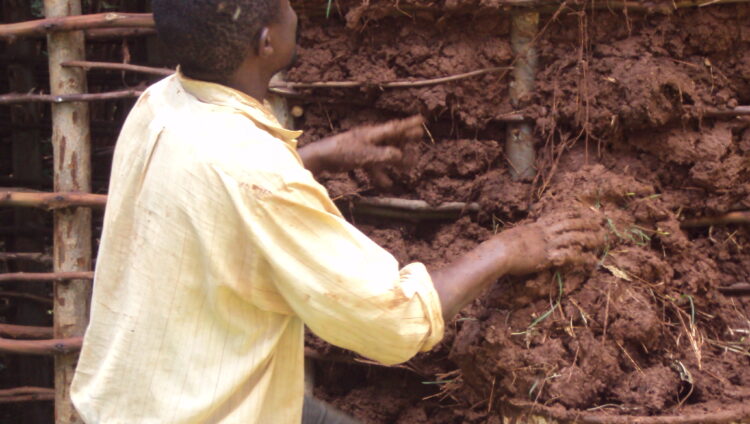
Why We Must Save Africa’s Ancestral Building Sciences
Hold on. Stop. This is something actually worth reading. Once upon a time, I had an architect come to visit my project of building with earth, in the early days. At the end of the visit, his main comment was: Wow! Shibero, ths is a pretty big project. There was no other comment or interest. He had been trained at a university in Nairobi. We are throwing the baby out with the bathwater. In our rush toward a singular, industrialized definition of progress, we are letting a priceless inheritance slip through our fingers: the highly sophisticated, time-tested building skills of our ancestors. For centuries, African builders possessed a profound, intuitive engineering mastery. They knew how to treat timber against termites using local flora, how to blend organic binders to create weather-resistant finishes, and how to manipulate thermal mass so that a structure naturally balanced its own temperature. These skills didn’t just work—they frequently outperformed modern industrial alternatives. Yet, because we have historically failed to rigorously document, blueprint, and pass down these practices, our children are growing up with zero knowledge of their own architectural heritage. Preserving these skills is not a romantic exercise in nostalgia; it is a critical safeguarding of human intelligence. Sad to say, when I visited a certain museum overseas, I saw a lot of African history, artifacts and other African skills highlghted. This was a Western museum! Why Preserving the Skill Matters When an architectural tradition is forgotten, we lose more than just shapes and designs—we lose a distinct body of science. The table below outlines the core attributes of the building heritage we must actively protect: Ancestral Building Science The Sophisticated Engineering Behind It Why It Must Be Preserved Microclimate Engineering Precise orientation and wall-thickness calculations that work with local wind currents and sun paths. Eliminates the need for high-energy, artificial mechanical cooling systems in tropical climates. Indigenous Material Chemistry Formulating structural mixes using localized clays, fibers, and natural stabilizers. Provides zero-cost, hyper-local building solutions that are entirely circular and zero-waste. Passive Structural Breathability Designing walls and roofs that naturally filter and exchange air without losing structural integrity. Prevents the toxic indoor air stagnation and mold common in poorly ventilated concrete structures. Communal Structural Geometry Modular structural frameworks designed to be erected safely through collective community labor. Preserves social cohesion and ensures building skills remain democratized rather than corporate monopolies. A Feasible, Ground-Up Education Framework Preservation doesn’t require massive national budgets or complex digital registries to begin. The most powerful way to keep this knowledge alive is to plant it directly into the minds of the next generation—starting with the classrooms, schools, and local university programs available right now. Our ancestors were not primitive builders—they were masterful sustainable engineers. It is our absolute duty to pass their formulas and methods down to our children, ensuring that the next generation proudly carries the blueprint of our identity into the future.
Read More
Unlearning the Colonial Classroom and Claiming Wisdom Beyond the Degree
Every morning across our cities, thousands of brilliant, highly credentialed people wake up, put on well-tailored clothes, and head to work that subtly drains their spirits. We are surrounded by the most academically qualified generation our continent has ever seen. We hold degrees, diplomas, and corporate titles that our grandparents could only dream of. Yet beneath the professional success, there is a quiet, aching question that keeps bubbling up: If I have done everything right, why am I struggling so much life situations and challenges? Let me be clear: I am not against education. I value learning deeply, and I hold degrees myself. Higher education opens doors and sharpens the intellect. But as I have journeyed through life—and through years of observing the world around me—I have learned some of my hardest, most profound lessons outside the lecture hall. Schooling never taught me how to navigate complex human relationships, how to weather unexpected life storms, or how to handle real-world situations with unflinching integrity when nobody is watching. The truth is, we were sold a promise that was never fully honest. From our earliest days in primary school, the rule was absolute: study hard, pass your exams, stack up your papers, and life will naturally unfold. Looking around today, it is clear that the system didn’t prepare us to live. It prepared us to comply. There is a vast difference between being trained and being educated. Most of what we experienced was institutional training. We were taught how to fit into structures built long before we arrived, how to meet someone else’s performance metrics, and how to chase a definition of success that originated far away from our own soil. Historically, true life skills were never taught through a blackboard or tested on a written exam. They were absorbed through deep, continuous engagement with those who had walked the path before us. We learned resilience, conflict resolution, and emotional maturity by sitting at the feet of elders, watching how they held space for communal grief and quiet reconciliation. We learned stewardship, discipline, and our place in the ecosystem through defined roles and daily responsibilities—tending cattle, cultivating crops, preparing meals, and caring for young ones. Transition rituals and rites of passage marked our growth, grounding us in the understanding that aging brought greater accountability to the collective, not just individual status. Knowledge was not an abstract concept you acquired for yourself; it was a living inheritance cultivated through relationships, story, and participation. When we traded those organic, intergenerational frameworks for a conveyor belt of standardized schooling, we lost the very spaces where character was forged. We began mistaking certificates for wisdom and institutional titles for personal identity. But what good is knowing how to manage a corporate budget if you don’t know how to navigate your own inner landscape, sit in quiet reflection, or honor the soil beneath your feet? So, how do we bridge this deep gap between the training we received and the wisdom we lost? Bridging it doesn’t mean burning our degrees or abandoning modern tools. It begins right in our homes, with how we raise the next generation and how we choose to show up: When the lifestyle you were trained to pursue leaves you exhausted and detached, you haven’t failed—the model failed you. Living intentionally starts the moment you are brave enough to step off that conveyor belt, honor the wisdom of those who came before us, show up fully for those coming after us, and decide that your soul’s clarity and cultural inheritance are worth vastly more than any certificate on the wall.
Read More
From Earthen Homes to the Self-Sufficient Kitchen Garden
Don’t let your kitchen garden plan you… you plan your kitcen garden. I have always loved gardens. But beautiful, practical, deeply satisfying gardens don’t just happen by accident. They have to be designed. When you love the land, you become your own landscape artist—or you partner with someone who understands the rhythm of the soil to turn a vision into reality. A truly beautiful garden speaks directly to our senses. It’s the vibrant burst of color, the infinite diversity of plant combinations, the lingering fragrance after a morning rain, and the chorus of birds and bees drawn to the life you’ve cultivated. It’s about texture, warmth, and grounded beauty. When you look around, what kind of gardens catch your eye? Take a moment to be observant and tune in to what truly moves you. Wherever you find beauty that holds, I can promise you that design principles were applied with intention. Designing an outdoor space might sound complicated, but it is one of the most playful, fulfilling things you can do—especially if, like me, you don’t mind getting your hands covered in rich, dark soil. With just a little know-how, even the most neglected, untidy plot can be transformed into a paradise that is as practical as it is beautiful. The Pitfalls of the Unplanned Space For every thriving garden that came together by pure luck, there are dozens more that fail despite huge investments of time, effort, and money. Why? Because they lack a cohesive plan. An unplanned garden is a lot like a small house that gets extended bit by bit, room by room, whenever the need arises. You end up with a conglomeration of spaces that never quite feels right—neither pleasing to the eye nor practical for daily living. When designing an earthen home for self-sufficiency, the structure and the land must breathe together. Your outdoor space needs intentional zones: places for reflection, natural shade, water capture, and, crucially, a dedicated space to feed the household. The Heart of Self-Sufficiency: The Kitchen Garden Which brings me to the absolute heart of self-sufficiency: the kitchen garden. One of the greatest joys of growing your own food is that space is never a true limitation. If you live in an apartment with a tiny balcony, containers and vertical planters can yield a bounty of fresh greens. But if you have space to work with, you can truly go to town and build an enviable veggie sanctuary. I remember visiting a friend who turned what was once a neglected, littered rubbish dump into a flourishing, abundant vegetable patch. Seeing that transformation—taking dead, forgotten ground and turning it into life-giving soil—excited and inspired me deeply. That is the magic of intentional living. In a self-sufficient kitchen garden, simplicity and variety are key. You want high-yield, high-nutrition crops that thrive naturally in your local climate: Nourishing Body and Spirit Self-sufficiency isn’t about isolating yourself or growing everything all at once. It’s about creating a living system around your home that yields nourishment, beauty, and peace. When you design your garden with intention, every seed planted is an investment in your own well-being. Look at your space with fresh eyes today. Get your hands into the dirt, sketch out a simple plan, and begin building a landscape that nourishes both your body and your spirit.
Read More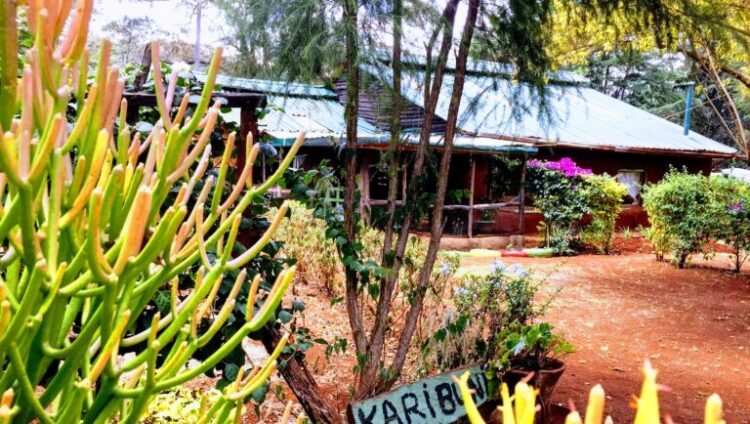
LIVE IN A MUD/EARTHEN HOUSE? NEVER!
Once upon a time, back in 2006, I built my first mud home. Yes, you read that right—bang in the middle of Karen. The structures were a reasonable size, spacious enough that a family of three comfortably occupied one of them. As the walls were going up, I became the neighborhood curiosity. I could practically see the thought bubbles popping up over my neighbors’ heads: She has finally, completely lost it. I vividly remember a friend visiting with a newly married young couple. As we chatted, I happened to mention my plans to build more mud homes to run as a Bed & Breakfast. The young bride’s face instantly twisted into an expression of sheer indignation. “I could never live in a mud house,” she declared. Hmmm… I thought to myself. We’ll see. The other two structures became classrooms for a children’s holiday school—a space dedicated to reconnecting them with their African heritage. It covered a wide, vibrant range of cultural history, but it quickly exposed a stark modern disconnect. It saddened me to realize how many of these urban children had never visited their “shags” or stepped inside a traditional mud dwelling. To many of them, a vegetable garden was a foreign concept, and a cow was something they had only seen in pictures. Milk didn’t come from an animal; it came from Nakumatt or Uchumi. It made me wonder: how many “urbanite” children today ever actually play outside with mud and grass, or learn to craft their own entertainment? The children arrived with a flurry of interesting questions, and I found myself systematically breaking down heavy misconceptions. Using pictures, storytelling, and my own life experiences, we unpacked their assumptions about mud homes, rural lifestyles, and the people who live in upcountry environs. I couldn’t help but notice a prevailing attitude of superiority—a subtle sense that “we are better” because of what we possess in the city compared to what they “lack” in the village. To challenge this, we explored the tangible benefits of mud houses—known elegantly as “cob” in the West. We talked about thermal efficiency, the remarkably low cost of building, and the stunning architectural designs possible with earth. By the end of the day, the children weren’t just informed; their entire perspective had shifted. At the conclusion of the holiday school, we rolled up our sleeves and built miniature houses out of mud and grass. The children loved every single minute of this messy, unfiltered outdoor play. When parents arrived, many of the kids flatly refused to go home. They left covered in earth, sporting massive, radiant smiles. It was pure joy to see them so utterly grounded and happy. Children are mirrors. Their attitudes toward others are incredibly telling of the casual commentary they absorb from the adult role models around them. Spending that time with them was a profound eye-opener. It leaves me wondering: how many of us consciously expose our children to the rich, raw reality of real life? Are we truly proud of our inheritance, or have we comfortably closed our eyes to where we came from? Hmmm…
Read MoreWhy Corporal Punishement Teaches Kids to Be Angry Adults
Every time the courts release another devastating ruling on school arson attacks in Kenya, the public conversation takes a predictable, lazy route. We see panel discussions and opinion pieces rushing to demand the return of the cane, shouting about “spoiled children” and a “lack of discipline.” But let’s expose a glaring historical reality that our society has conveniently forgotten: corporal punishment is already a direct violation of our legal framework. The Ministry of Education officially banned caning in 2001. Article 29 of the Constitution explicitly guarantees freedom from all forms of physical violence, and the Children Act of 2022 formally stripped away any remaining legal justification for physical correction. Yet, despite decades of clear legal prohibition, the hard truth is that many schools never actually stopped caning our children. The Myth of “I Turned Out Fine” We frequently hear parents defend the cane by saying: “We were beaten when we were young, and nothing happened to us. We turned out just fine.” But as a practicing clinical therapist, I see the hidden cost of that lie every single day behind closed doors. I have sat across from countless adults who are deeply, psychologically harmed by the very childhood violence they call “discipline.” They did not turn out fine. They turned out to be adults living with severe anxiety, broken self-esteem, deep-seated trauma, and a total inability to manage their emotions without lashing out or shutting down entirely. Under local and international children’s rights laws, caning is not correction—it is outright abuse. The Core Issue: Training the Wrong Thing A wise headteacher once told me: “Every time a child does something wrong, it is an opportunity to train them into doing the right thing.” But what are we actually training them to do when we use the cane? We are not teaching them emotional regulation, accountability, or discipline. We are teaching them that might makes right. We are equipping them with highly destructive life skills: how to suppress anger until it explodes, how to use violence to solve conflicts, and how to operate out of pure fear. We are actively training them how to be angry adults. When these children graduate and enter the workforce, marriages, and communities, they carry those exact negative skills into the world. The Toxic Cycle of Mutual Contempt Caning destroys the foundational bond of education. Because of the ongoing whipping, these children know they are actively “hated” by their handlers. In return, they grow to deeply hate their schools and their teachers. Respect cannot be beaten into a human being. When you replace respect with physical terror, you create a toxic, two-way street of animosity. The children withdraw, the teachers rule by fear, and the classroom becomes a powder keg. School unrest is not a random act of malice. It is the predictable, devastating language of children who have been systematically stripped of their voices, their agency, and their dignity. What We Need to Take Away This is not the first, second, or even third time we are having this debate in our society. We must break this cycle. What do we want the different people involved to take away from this? A Shared Responsibility Ultimately, a school should be a sanctuary, not a processing factory for trauma. When we resort to the cane, we admit that we have run out of words, run out of patience, and run out of better ideas. It means we have failed to do the harder, more necessary work of listening. If we want a society full of emotionally intelligent, stable, and peaceful adults, we have to start by practicing those exact values with our teenagers today. It is our job to absorb the shocks of life, not pass them down to a generation that doesn’t have the tools to process them. Let’s stop beating them into submission. Let’s start training them into the right thing. This crosses over to CHID ABUSE. This article was contributed by a practicing clinical practitioner Ms.Shiibero R. Akatsa with extensive experience evaluating adolescent mental health and community structures locally and abroad.
Read More
The Silent Hurt Driving Our Children to the Edge
If you walk into many public boarding schools across the continent today, you will notice something deeply troubling. The high walls, and the rigid, unyielding routines don’t feel like a sanctuary for education. They feel like a detention center. In the wake of devastating tragedies like the Utumishi Girls Academy fire, the public conversation always takes a predictable route. We talk about “spoiled children,” a “lack of discipline,” and the need for stricter punishments. I couldnt beleve it, when i heard one indiviual in educationin Kenya – after this awful tragedy at Utumishi Girls academy – doare to talk about introducing ‘canning’ back in schools. Something that has been happening for the longest time. But this lazy narrative completely ignores a massive, bleeding wound in our education system: the quiet, daily emotional abuse of our children. From my own deep research into student unrest, the truth is glaringly clear. Our children are not burning schools because they are inherently malicious. They are burning them because they are angry, terrified, and utterly helpless. Now, before we go any further, I want to say something very important. This is not a blanket condemnation of every single school in Kenya. We have incredible public and private schools in this country led by amazing, selfless principals and loving teachers who protect our children daily. But we cannot hide behind the exceptions. The hard truth from research and our current headlines is that this “bootcamp” culture and silent frustration are an overwhelming reality in the majority of our public boarding institutions. When Schools Become Battlefields The public school system has become a breeding ground for trauma. Many children are already coming from fragile backgrounds, dealing with poverty, neglect, or domestic friction at home. They enter school hoping for a safe space to grow, but instead, they are met with systemic hostility. Overcrowded dormitories, poor sanitation, and extreme academic pressure create a baseline of constant physical and mental stress. But the heaviest blow comes from the culture of authority. Teachers, administrators, and staff—overworked, underpaid, and drowning in their own personal life stresses—frequently turn the classroom into a battleground. They use their power to humiliate, intimidate, and break the spirits of the children in their care. Instead of mentors, these authorities become the enemies of the child’s well-being. When a student tries to complain about basic human needs—like terrible food, sickness, or mental exhaustion—their voices are completely shut down. There are no channels for open communication, no trusted welfare systems, and a severe shortage of professional counselors. The institution effectively becomes a closed, suffocating world where the child has zero agency. Separating Adult Stress from Child Care We must say it clearly: our children are absorbing our adult frustrations. When a teacher brings financial anxiety, marital problems, or career stagnation into the classroom and takes it out on vulnerable teenagers, it is a form of institutional abuse. As adults, we must learn the vital boundaries of emotional maturity. We must separate our personal hardships from the way we interact with children. It is our job to absorb the shocks of life, not pass them down to a generation that doesn’t have the psychological tools to process them. When we fail to do this, we turn schools into pressure cookers, and arson becomes the student’s desperate language of protest. The Road to Healing: Intentional Living for the Masses Fixing this national emergency requires a complete re-imagining of what a school should be. We must demand an education system that values emotional safety as much as it values mean scores and high grades. This is where intentional living comes in for the wider community. We must actively choose to listen to our children. We need to build homes and school environments where children are seen as human beings who deserve representation, respect, and an emotional safety net. Let us stop treating our youth like cogs in an academic machine. By choosing presence, open communication, and soft empathy over rigid power and control, we can dismantle the bootcamp culture and give our children their sanctuaries back.
Read MoreHow I Overcame Impostor Syndrome and Embraced Imperfection
Are you a perfectionist who constantly feels like you’re falling short? Do you find it difficult to acknowledge your achievements and live in constant fear of being exposed as a fraud? If so, you may be familiar with the frustrating phenomenon known as Impostor Syndrome. But don’t worry, I’ve been there too, and in this article, I’ll share my personal journey of overcoming Impostor Syndrome as a perfectionist. Together, we’ll explore the connection between perfectionism and self-doubt and uncover strategies to break free from its grip. The Perfectionist’s Mindset As a perfectionist, I’ve always held myself to impossibly high standards. I believed that my self-worth was directly linked to my achievements and the approval of others. But let me tell you, this mindset can be exhausting. The constant need for validation and the fear of failure created a never-ending cycle of self-criticism. The Impostor Phenomenon: My Worst Nightmare Impostor Syndrome, or the “Impostor Phenomenon,” took hold of me with its relentless grip. Despite my evident accomplishments, I couldn’t shake the feeling of inadequacy and the fear of being exposed as a fraud. This struggle hit home for me as a perfectionist due to a few reasons that I’d like to share: Overcoming the Impostor Syndrome My journey toward overcoming Impostor Syndrome wasn’t easy, but it was worth it. Here are some strategies that helped me break free from the clutches of self-doubt: Conclusion As a former perfectionist plagued by Impostor Syndrome, I can attest to the power of overcoming self-doubt and embracing imperfection. By understanding the underlying causes and implementing strategies to counter negative thought patterns, we can reclaim our self-worth and confidently acknowledge our achievements. Remember, true success is not measured by flawlessness but by the growth, learning, and impact we bring to the world. So let’s break free from the shackles of perfectionism and step into our authentic selves. Together, we can conquer Impostor Syndrome and thrive. Need impostor syndrome therapy to help you overcome it? Email: info@shibero.com
Read More