
The Impact of Fathers Who Chose to Leave Their Children
Studies show that around one-third of children in sub-Saharan Africa are being raised by single mothers. In Kenya alone, over one-third of households are headed by women. This reality raises a critical question: where are the fathers? This message is directed toward fathers who have walked away from their responsibilities, as well as those who are physically present in the home but emotionally absent. When a man exists within a family environment only to have personal needs met—coming home to eat or sleep without connecting with the children—that man is a stranger in his own house. This is a difficult but necessary conversation. In African communities, from ancestral traditions to the present day, the role of a father is of paramount importance. When that role is vacant, children are deprived of essential foundations. The Identity GapLineage and a sense of belonging often stem from the father. Absence can strip a child of their understanding of where they stand within the community and how to carry a family name with dignity. Without a father’s input, children are often left trying to navigate their identity without a map. Guidance for Sons: Defining ManhoodSons look to their fathers to understand what it means to be a man. This isn’t about physical toughness, but about the weight of responsibility. Without a present role model, young men may grow up uncertain and likely to repeat the same patterns of absence they witnessed, struggling to manage their own future families. Guidance for Daughters: The Standard of LoveA father is typically the first person to affirm a daughter’s beauty and worth. When a daughter hears “I love you” from her father first, it sets a standard. Without this affirmation, young women may seek validation in a world that often attaches a price to “love.” A father’s presence teaches a daughter how she deserves to be treated and helps her establish healthy boundaries. Beyond Financial SupportProviding a roof and paying school fees can be done from a distance, but that is not the fullness of fatherhood. True fathering requires interaction and connection. It is about the process of truly knowing one’s children. While some men may have experienced the pain of an absent father themselves, that pain should not be passed down. It is possible to break the cycle. A Note on SafetyIt is important to clarify that this call to return does not apply to situations involving abuse or violence. If a departure was due to the mistreatment of a spouse or children, the safety of the family remains the priority. Reflection and ActionFor those who have the opportunity to change, consider these questions: The opportunity to begin again is never completely lost. Second chances exist for those willing to do the work of rebuilding relationships. For anyone who has a story of transformation or wisdom regarding fatherhood, sharing those experiences can provide hope and guidance to other families in similar positions. Children need guidance, presence, and connection. It is never too late to learn how to be a father.
Read MoreAre We Unconsciously Teaching Our Children to be Ashamed of Their Roots?
In 2006, I built my first Earth Holiday school in a leafy Nairobi suburb. I remember the look on a visitor’s face one time—a young bride—who said with pure indignation, “I could never live in a mud house,” as I explained – I now wanted to design a mud house. That discomfort wasn’t about the soil. It was about a deep-seated fear that if we don’t use concrete, we haven’t “arrived.” I turned those homes into classrooms for a children’s holiday school, and it was a revelation. These “urbanite” children had never been to their shags. They thought milk only came from a supermarket shelf. Most tragically, they carried a sense of superiority toward rural life, believing that “status” is something you buy, rather than something you are. Using What is in Our Hands We are raising a generation that believes the solution to every problem is to “buy new.” They are struggling under the weight of a world that tells them they must constantly consume to build their identity. But in the mud classroom, we taught a different truth: The earth has already provided everything we need. When we made mud-and-grass houses, I saw the children transform. And why wouldn’t they? They were interacting with nature. They realised that beauty doesn’t have to come from a shop—it can come from the soil beneath their fingernails. We talked about recycling, about resourcefulness, and about the genius of using what is already in our hands. When a child learns to make their own “entertainment things” from grass and mud, they break the golden handcuffs of consumerism. They realise that joy is not a transaction. The Duty to Show Them How to Love As parents and elders, it is our responsibility to show our children how to love life without a price tag attached. If we only value what is “new” and “expensive,” we teach them to be eternally dissatisfied. Soil is good. Nature is a generous mother who has already given us the blueprint for health and home. When we let our children play in the dirt, we aren’t just letting them get “messy”—we are letting them connect with the source of their life. We are teaching them that dignity does not come from money, possessions, or power, but from Ubuntu: I am because we are. The Real Inheritance Our African ancestors built with amazing traditional skills, working alongside the community. They didn’t need to import their dignity; they dug it out of the ground and shaped it with their hands. By looking down on “upcountry” life, we are closing our eyes to a sustainable, peaceful way of being. We are teaching our youth to chase a “Western model” of success that even the West is now trying to escape. The real question is: Are we proud of our inheritance? Or are we raising a generation that is “successful” on the outside, but spiritually bankrupt on the inside because they’ve forgotten how to use what they have? Let’s take pride in our roots. Let’s teach our children that the greatest luxury isn’t what you can buy—it’s the wisdom to appreciate what you already have.
Read MoreWhy I Traded the Rat Race for an Intentional Living Lifestyle
For decades, I ran the race the world told me to run. I lived in large, exciting cities. I worked hard in corporate and international organisations. I was “successful” by every modern standard. But inside, there was a constant, gnawing noise. Noise. Noise. Noise. It was in my head, around me, and eventually, in my blood pressure. My brain felt overwhelmed by the excess stimulation and the endless demand that “enough” was always just a little more than I already had. I realised my body wasn’t created for this level of chronic stress. Neither was yours. I spent years hoping life would just “calm down,” until I realised: Life doesn’t change. You have to change your life approach. In my 40s, I began the journey off the treadmill. Now, in my sixties, I have finally found what I was yearning for: a quiet, simple, off-grid lifestyle. I swapped the “Concrete Mask” for what I affectionately call my Mud Palace. The Wisdom of the Simple Life Choosing to live isn’t about “having less”; it’s about making room for more. When I decluttered my life from the world’s demands, I didn’t just find peace—I found these life-altering truths: Why We Make It Complicated Life is inherently simple, but we make it complicated to satisfy a “colonial hangover” of what success should look like. We build fireplaces we never light and balconies we never sit on, all while our inner selves are starving for connection—with nature, with family, and with God. I no longer have to have everything, and I don’t have to have it now. By God’s grace, I have learned to say a firm “no” to the rush so I can say a beautiful “yes” to the present.
Read MoreReclaiming Dignity in Kenyan Earth Building
This isn’t just a trend; it is a global shift. In the West, building with the earth is no longer ‘alternative’—it is a premium luxury. It is the choice of the visionary, the environmentalist, and the elite who pay architectural firms thousands of dollars to design ‘bespoke’ earthen sanctuaries. They call it innovation. Yet, here on our own soil, we do the opposite. We ‘poo-poo’ the very ground that birthed our ancestors. We dismiss our own sophisticated building traditions as ‘primitive’ or ‘backwards,’ rushing instead to bury ourselves in the suffocating heat of concrete boxes. We bankrupt our futures to buy materials that don’t breathe, while the West is busy rebranding our heritage as the pinnacle of 21st-century living. This is the colonial hangover at its most toxic: we reject the gold beneath our feet until a foreigner puts it in a gallery and calls it ‘Art.’ We see stone and cement as the only path to dignity, even when that path leads to soul-crushing financial, personal, and emotional burdens. Meanwhile, in the West, these traditional methods are celebrated as “Cob Houses”—unique, eco-friendly status symbols for the wealthy e.g.: Hardy’s Cottage (Dorset)A famous example of a traditional, picturesque cob and thatch home, once home to Thomas Hardy; Dingle Dell (“Cob Castle”): Featured on Grand Designs, this is a 650 square-meter, four-bedroom, six-bathroom house in East Devon, built using traditional cob techniques. This isn’t just happening abroad. Even here, on our own soil (Kenya), we see Westerners living in beautiful earthen homes that are admired as “artistic” or “rustic.” I know of a number of them, built by people from the West – mainly England. They are permitted the luxury of the earth because of the status we afford them, while we feel pressured to bankrupt ourselves for stone to prove we have “arrived.” It is a colonial hangover—a snobbishness in our self-perception that tells us our heritage is only high-class when a foreigner occupies it. As Africans, we are “the earth” people. Soil is etched into our ancestral DNA. Yet, in the pursuit of a Western model of success, we have been conditioned to look down on what was once ours. I see it everywhere: grand houses with sprawling gardens that no one sits in, wide balconies that remain empty, and ornate fireplaces that never feel the glow of a flame. These are not homes; they are architectural masks—expensive stages for a life that isn’t actually being lived. A Sanctuary, Not Just a Structure My home, which I call the Garden of Eden, was born from a childhood love of playing with mud. By using traditional building skills, I wanted to prove that our architectural heritage isn’t a step backwards—it is a sophisticated way to live in the 21st century. Living in an earthen home changes your relationship with the world. In a stone house, you are often walled off from nature, breathing in the silent gases emitted by industrial materials. In my home, the walls breathe with me. When the sun is scorching, the earth keeps the interior cool. When the night turns cold, the walls radiate the warmth they’ve stored all day. At night, I look through transparent roofing to watch the moon, feeling a sense of safety that no steel gate could ever provide. The “man-made noises” of hooting cars and city rush are replaced by the singing of birds and the whisper of the wind. It is a place of continuous worship; a sanctuary where I can finally hear my own heart. The Cost of Authenticity Choosing this lifestyle requires a conscious decision to value time over status. Many people visit the Garden of Eden and “exhale.” They tell me they wish they could live like this, yet they feel trapped—not by their bank accounts, but by the expectations of friends, family, and society. They are afraid of what people will say if they stop running the race. But here is what I have learned: The quickest road to dissatisfaction is to compare your life to others’. When you shed the “mask” the world asks you to wear, you stop performing and start living. Building with the earth didn’t just give me a roof over my head; it unearthed a way to live that is true, free, and deeply, beautifully simple. Join the Journey: Step Into a Space of Peace It is one thing to read about an intentional life; it is another to stand in a place where the world’s noise finally stops. Many of you have asked how to begin—how to shed the “mask” and start building a life that is truly yours. While the Garden of Eden remains my private sanctuary, I am opening a door for you to experience its principles in a setting just as sacred. This March, I am hosting an exclusive workshop at a serene retreat centre in Karen, Nairobi. Nestled in the quiet, leafy outskirts of the city, we will gather to explore: Space is strictly limited to maintain a quiet, reflective atmosphere. Claim Your Spot for the March Workshop: https://forms.gle/CmKiSWQRgWhdvUBc9 https://dtearthgardens.wixsite.com/dtearthliving | https://shiberoa.wixsite.com/shiberoscobandb | https://shiberoa.wixsite.com/shiberoakatsa
Read MoreCould You Be On the Endless Treadmill of Life?
I spent years thinking that moving faster meant I was winning, only to realise I was just revving my engine in neutral. If you feel ‘successful’ on the outside but completely depleted on the inside, this is for you. There is a specific kind of tired that sleep cannot reach. It’s the exhaustion that settles in when we’ve spent years on the “treadmill of life”—moving faster and faster, yet never feeling like we’ve truly arrived. Most of us don’t even realise we’re on it until our bodies, or our spirits, finally whisper for us to stop. The Global Pulse of Exhaustion If you feel overwhelmed, you are part of a massive, quiet chorus. Statistics show that the world is more “revved up” than ever. According to recent Gallup polls, nearly 44% of adults worldwide report experiencing a great deal of stress daily. The World Health Organisation (WHO) identifies stress as the “health epidemic of the 21st century,” contributing to over 60% of all human illness and disease. The Hidden Price of the Race The treadmill lifestyle doesn’t just take our time; it takes our essence. When we live reactively—answering every ping and meeting every deadline—we experience a slow erosion of the self. We pay for this speed with our family relationships, our physical health, and our inner joy. We become like sheep following a path we didn’t choose, wondering why we feel so lonely in a crowd. The Courage to Realise The most sobering realisation is this: Life does not slow down by default; it only slows down by choice. Time moves far faster than our plans. We assume there will always be a “better time” to seek the quiet, but years disappear while we are busy being busy. To step off the treadmill, you first have to realise that it is spinning beneath you. You have to acknowledge that the only person responsible for the life God entrusted to you is you. When we finally choose to step off the bandwagon and simplify, we don’t lose—we actually start to win. By refusing to go ‘wherever the wind blows,’ you take back the controls of your own life. You are no longer just busy; you are intentional, focusing only on what truly matters and aligning your days with your purpose. In this quiet space, you don’t just exist; you finally begin to live a full, deep, and meaningful life. A Question for the Heart As you breathe in this moment, ask yourself: Who is setting the pace of my life? If the world is setting it, you will always be out of breath. Sometimes, the most faithful thing you can do for yourself is to simply stop. Because at the end of the day, we must face the most haunting question of all: “What does it profit a man to gain the whole world, and yet lose his soul?” (Mark 8:36) For reflections on simple, rooted living, visit: https://shiberoa.wixsite.com/shiberoakatsa Journey with me on YouTube:👉 https://www.youtube.com/@Shibero_R_Akatsa/videos Contact: spht@shibero.com
Read More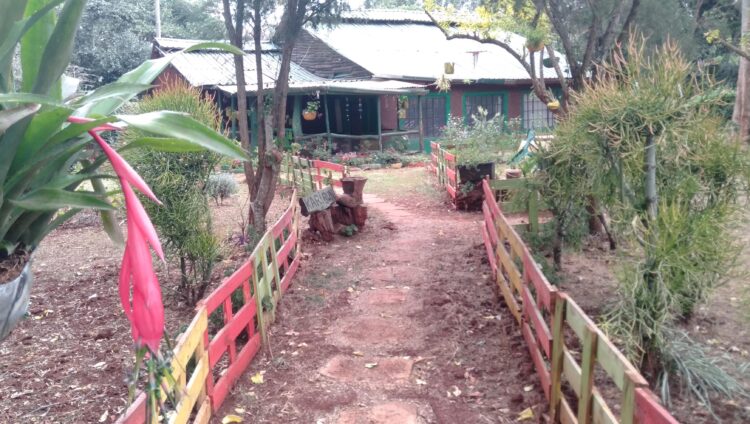
What My Simple Garden Of Eden Lifestyle Is About
So what does it mean to live simply and why does it matter? It’s not a minimalist trend that you may be thinking of, but rather, it has more to do with how we were created and calls for a complete mindset shift to get back to the original state of existence we had in the Garden of Eden. For this purpose, I am going to define simple living as living free from the things the world loves and living as simply a with a focus on living a life of purpose and intention in everything you do. This means rather than pursuing wealth or ease or glory or power –rather than building our empire you may be thinking, but rather, it has more to do with how we were created and calls for a complete mindset shift to get back to the original state of existence we had in the Garden of Eden. It is also a life of joyful unconcern for possessions and the one thing that sufficiently reorients our lives so that possessions can be genuinely enjoyed without destroying you. Living a simple life is an inward attitude reflected in an outward lifestyle. Simply put, I would describe simplicity as the ability to not allow my life to be chained to too many things, whether status, possessions, activities, or responsibilities. When you embrace simplicity, you’re no longer influenced by the values of society. You can follow your conscience, without concern for appearance. WHAT LIVING A SIMPLE LIFE INVOLVES The more possessions, power, and control people have, the more people see them as being wealthy and successful. But even with all the possessions in the world, there never seems to be peace with it – but hard relentless work, time away from your loved ones, and hardly any peace. There are three main attitudes related to having possessions that lead to peace. The anxiety of having to protect, hide and keep MY things safe from those who want to steal from you. Once you begin to cultivate these inner attitudes, what might the outer expression of this renewing of your mind, you will begin to see the following attitudes manifesting in how you perceive material things you’ll: Benefits of My Simple Lifestyle The following are just some of the benefits of simplifying your life: You might choose to have fewer friends, but the friends you have will be much closer. It’s easier to focus on the other person when your life is more straightforward. The interaction is also sincerer since you’re free of the need to impress them. Choose people in your life whom you can trust. The more things you own, the more responsibilities you have, the more you need to service your ego, and the less freedom you enjoy. You will find that simple things such as walking, looking at the clouds, and smelling flowers can make you so happy. A simple life gives you freedom from issues in life that should not be of major concern. It can be hard to learn to relax when you’re used to running around trying to get everything done. But free time is a gift that only a few truly appreciate.
Read MoreWHY I LOVE MY SIMPLE GARDEN OF EDEN LIFESTYE
From an early age, I have always had a yearning for a quiet simple life, with as little stress and complications as possible. And to this day, in my sixties, that’s precisely what I am doing. Living a simple quiet lifestyle. Off the grid. and off the treadmill. And yes. It has been worth it. A journey that started in my 40’s. Yes, it took that long to get off the treadmill of life. Having worked and lived overseas through my twenties, thirties, and forties, the yearning stayed in me. When I think about it, it makes me think that we were not created to have all the stress that goes with how we live our lives. Neither were our bodies!!! We need to just stop. And rest amidst all that is going on around us. Because it is good and healthy and healing. I had worked hard in corporate and international community organizations to create a quality life for my daughter and I. Living in large and exciting cities provided great opportunities and entertainment, but what I once found exciting I began to find challenging. My brain felt increasingly overwhelmed with noise, excess stimulation, distractions, and ever-increasing crowds, all helping to pump up my stress levels. Noise. Noise. Noise. In my head.Around me. In me. Up went my blood pressure, until I consciously decided all ‘this’ wasn’t me. Much as I tried, I knew it wasn’t working for me, because of all the anxiety I was experiencing. I got tired of having to conform to the world’s standards to be ‘successful’. I wasn’t in tune with a world that demanded that ‘enough’ was always just a little more than I already had, and there wasn’t a lot of room left for the truly great pleasures of life: family, friends, and the time to enjoy them, nature and just being able to be and connect with God. I wasted many years just hoping life would change and things would calm down until I finally realized life doesn’t change. It has the potential to get even worse. I understood that my only real option was changing my life approach. I had to say no to another day of rushing around and feeling frustrated. I didn’t want any more prescriptions to mask another symptom of the real problem— chronic stress. It became apparent that I needed to get serious about simplifying my life. As a result, I found myself thinking about a quieter, more simplistic way of life, being closer to nature and in a more peaceful setting, which was more the person I was created to be. I worked from home surrounded by nature. I was more productive. And got my basic needs met, followed by enjoying what I had in my hands. And now I can say, by God’s grace, and by decluttering from the world and its demands, I really enjoy living my simple life where I co-exist with nature and live in my Mud Palace. BENEFITS OF THE SIMPLE LIFE The following are just some of the benefits of simplifying your life: You might choose to have fewer friends, but the friends you have will be much closer. It’s easier to focus on the other person when your life is more straightforward. The interaction is also sincere since you’re free of the need to impress them. Choose people in your life whom you can trust. The more things you own, the more responsibilities you have, the more you need to service your ego, and the less freedom you enjoy. You will find that simple things such as walking, looking at the clouds, and smelling flowers can make you so happy. A simple life gives you freedom from issues in life that should not be of major concern. It can be hard to learn to relax when you’re used to running around trying to get everything done. But free time is a gift that only a few truly appreciate. LIFE IS SIMPLE BUT WHY DO WE MAKE IT COMPLICATED? Have your say at Disqus!
Read More