
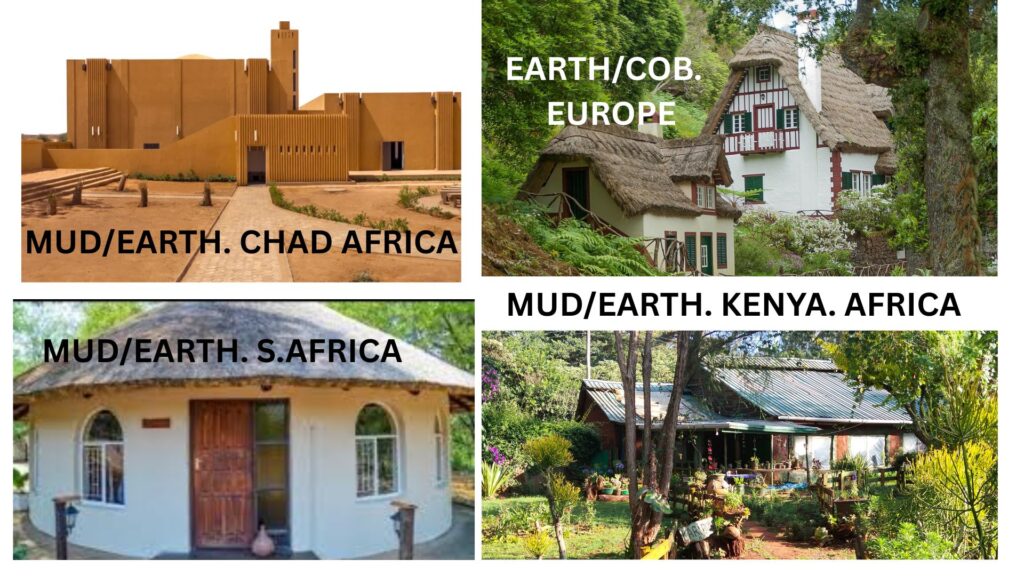
This isn’t just a trend; it is a global shift. In the West, building with the earth is no longer ‘alternative’—it is a premium luxury. It is the choice of the visionary, the environmentalist, and the elite who pay architectural firms thousands of dollars to design ‘bespoke’ earthen sanctuaries. They call it innovation.
Yet, here on our own soil, we do the opposite. We ‘poo-poo’ the very ground that birthed our ancestors. We dismiss our own sophisticated building traditions as ‘primitive’ or ‘backwards,’ rushing instead to bury ourselves in the suffocating heat of concrete boxes. We bankrupt our futures to buy materials that don’t breathe, while the West is busy rebranding our heritage as the pinnacle of 21st-century living. This is the colonial hangover at its most toxic: we reject the gold beneath our feet until a foreigner puts it in a gallery and calls it ‘Art.’
We see stone and cement as the only path to dignity, even when that path leads to soul-crushing financial, personal, and emotional burdens. Meanwhile, in the West, these traditional methods are celebrated as “Cob Houses”—unique, eco-friendly status symbols for the wealthy e.g.: Hardy’s Cottage (Dorset)A famous example of a traditional, picturesque cob and thatch home, once home to Thomas Hardy; Dingle Dell (“Cob Castle”): Featured on Grand Designs, this is a 650 square-meter, four-bedroom, six-bathroom house in East Devon, built using traditional cob techniques.
This isn’t just happening abroad. Even here, on our own soil (Kenya), we see Westerners living in beautiful earthen homes that are admired as “artistic” or “rustic.” I know of a number of them, built by people from the West – mainly England. They are permitted the luxury of the earth because of the status we afford them, while we feel pressured to bankrupt ourselves for stone to prove we have “arrived.”
It is a colonial hangover—a snobbishness in our self-perception that tells us our heritage is only high-class when a foreigner occupies it.
As Africans, we are “the earth” people. Soil is etched into our ancestral DNA. Yet, in the pursuit of a Western model of success, we have been conditioned to look down on what was once ours. I see it everywhere: grand houses with sprawling gardens that no one sits in, wide balconies that remain empty, and ornate fireplaces that never feel the glow of a flame. These are not homes; they are architectural masks—expensive stages for a life that isn’t actually being lived.
A Sanctuary, Not Just a Structure
My home, which I call the Garden of Eden, was born from a childhood love of playing with mud. By using traditional building skills, I wanted to prove that our architectural heritage isn’t a step backwards—it is a sophisticated way to live in the 21st century.
Living in an earthen home changes your relationship with the world. In a stone house, you are often walled off from nature, breathing in the silent gases emitted by industrial materials. In my home, the walls breathe with me. When the sun is scorching, the earth keeps the interior cool. When the night turns cold, the walls radiate the warmth they’ve stored all day. At night, I look through transparent roofing to watch the moon, feeling a sense of safety that no steel gate could ever provide.
The “man-made noises” of hooting cars and city rush are replaced by the singing of birds and the whisper of the wind. It is a place of continuous worship; a sanctuary where I can finally hear my own heart.
The Cost of Authenticity
Choosing this lifestyle requires a conscious decision to value time over status. Many people visit the Garden of Eden and “exhale.” They tell me they wish they could live like this, yet they feel trapped—not by their bank accounts, but by the expectations of friends, family, and society. They are afraid of what people will say if they stop running the race.
But here is what I have learned: The quickest road to dissatisfaction is to compare your life to others’. When you shed the “mask” the world asks you to wear, you stop performing and start living. Building with the earth didn’t just give me a roof over my head; it unearthed a way to live that is true, free, and deeply, beautifully simple.
Join the Journey: Step Into a Space of Peace
It is one thing to read about an intentional life; it is another to stand in a place where the world’s noise finally stops. Many of you have asked how to begin—how to shed the “mask” and start building a life that is truly yours. While the Garden of Eden remains my private sanctuary, I am opening a door for you to experience its principles in a setting just as sacred.
This March, I am hosting an exclusive workshop at a serene retreat centre in Karen, Nairobi. Nestled in the quiet, leafy outskirts of the city, we will gather to explore:
- The Foundations of Intention: Practical steps to align your daily life with your core values.
- The Wisdom of Earthen Living: Why natural materials are the key to health, wealth, and spiritual connection.
- The 8-Step Reset: A guided deep-dive into purging physical and digital clutter to reclaim your time.
Space is strictly limited to maintain a quiet, reflective atmosphere.
- Location: Karen, Nairobi
- Date: March 28th, 2026
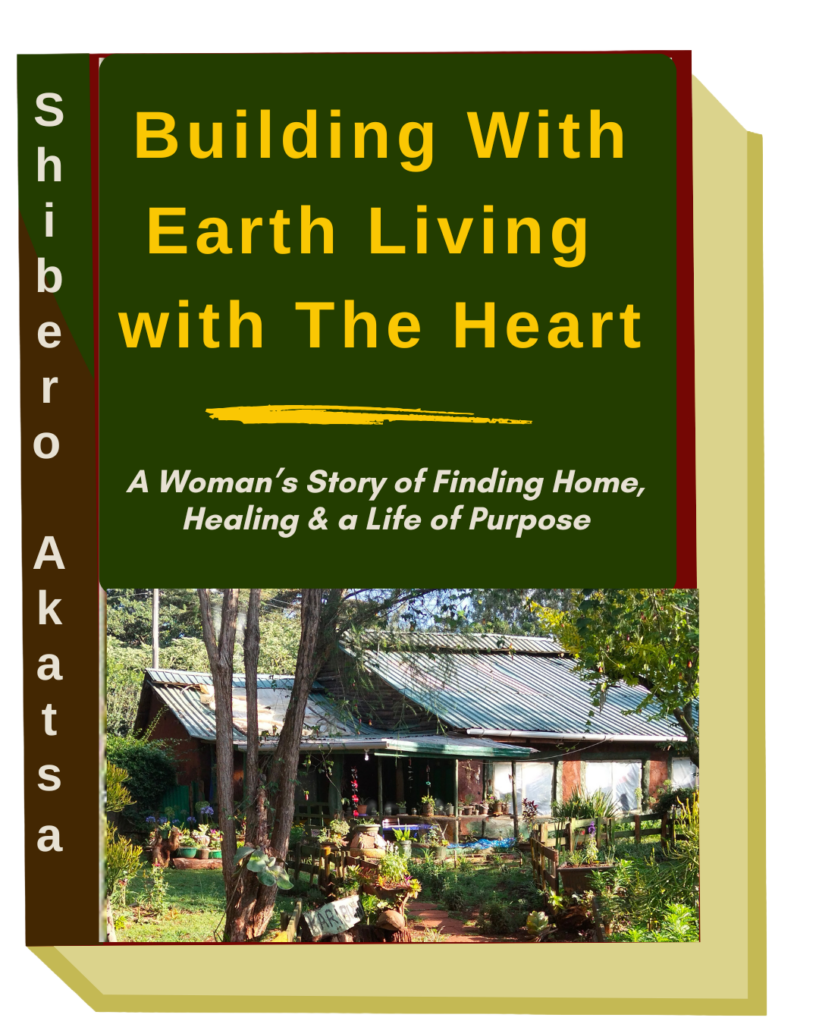
- Book: Built with Earth, Living with the Heart
Claim Your Spot for the March Workshop:
https://forms.gle/CmKiSWQRgWhdvUBc9
https://dtearthgardens.wixsite.com/dtearthliving | https://shiberoa.wixsite.com/shiberoscobandb | https://shiberoa.wixsite.com/shiberoakatsa
