
LIVE IN A MUD/EARTHEN HOUSE? NEVER!
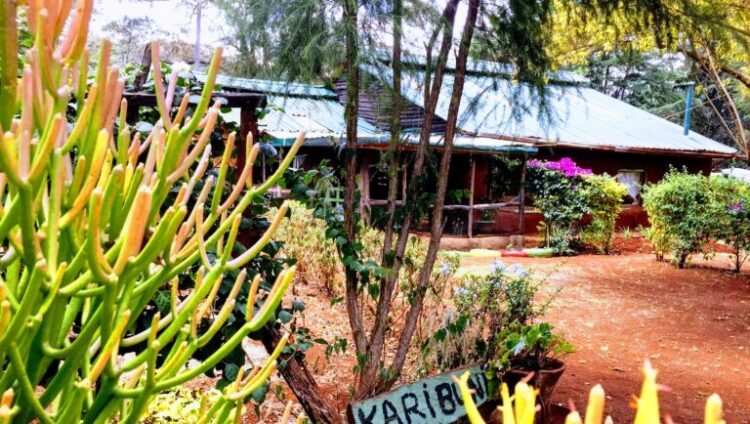
Once upon a time, back in 2006, I built my first mud home. Yes, you read that right—bang in the middle of Karen. The structures were a reasonable size, spacious enough that a family of three comfortably occupied one of them. As the walls were going up, I became the neighborhood curiosity. I could practically see the thought bubbles popping up over my neighbors’ heads: She has finally, completely lost it. I vividly remember a friend visiting with a newly married young couple. As we chatted, I happened to mention my plans to build more mud homes to run as a Bed & Breakfast. The young bride’s face instantly twisted into an expression of sheer indignation. “I could never live in a mud house,” she declared. Hmmm… I thought to myself. We’ll see. The other two structures became classrooms for a children’s holiday school—a space dedicated to reconnecting them with their African heritage. It covered a wide, vibrant range of cultural history, but it quickly exposed a stark modern disconnect. It saddened me to realize how many of these urban children had never visited their “shags” or stepped inside a traditional mud dwelling. To many of them, a vegetable garden was a foreign concept, and a cow was something they had only seen in pictures. Milk didn’t come from an animal; it came from Nakumatt or Uchumi. It made me wonder: how many “urbanite” children today ever actually play outside with mud and grass, or learn to craft their own entertainment? The children arrived with a flurry of interesting questions, and I found myself systematically breaking down heavy misconceptions. Using pictures, storytelling, and my own life experiences, we unpacked their assumptions about mud homes, rural lifestyles, and the people who live in upcountry environs. I couldn’t help but notice a prevailing attitude of superiority—a subtle sense that “we are better” because of what we possess in the city compared to what they “lack” in the village. To challenge this, we explored the tangible benefits of mud houses—known elegantly as “cob” in the West. We talked about thermal efficiency, the remarkably low cost of building, and the stunning architectural designs possible with earth. By the end of the day, the children weren’t just informed; their entire perspective had shifted. At the conclusion of the holiday school, we rolled up our sleeves and built miniature houses out of mud and grass. The children loved every single minute of this messy, unfiltered outdoor play. When parents arrived, many of the kids flatly refused to go home. They left covered in earth, sporting massive, radiant smiles. It was pure joy to see them so utterly grounded and happy. Children are mirrors. Their attitudes toward others are incredibly telling of the casual commentary they absorb from the adult role models around them. Spending that time with them was a profound eye-opener. It leaves me wondering: how many of us consciously expose our children to the rich, raw reality of real life? Are we truly proud of our inheritance, or have we comfortably closed our eyes to where we came from? Hmmm…
Read More