
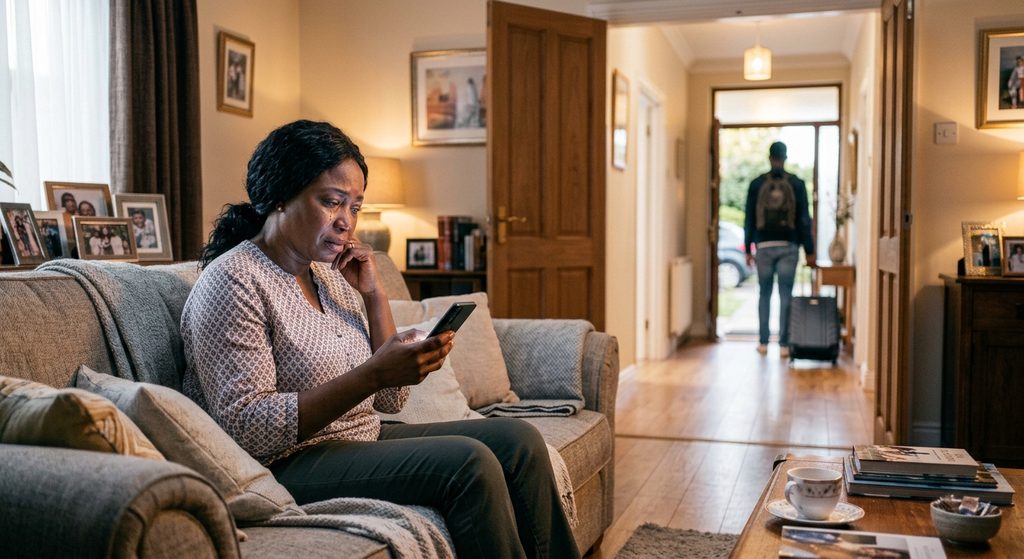
“They never saw us physically fight. We kept the arguments behind closed doors. Why are they so angry now?”
How often I have heard this phrase from heartbroken divorced parents. They are completely blindsided when their young adult child leaves home and suddenly cuts contact, citing “childhood trauma” from their parents’ marital and family breakdown.
The Invisible Trauma of the Home Atmosphere
What many well-meaning parents fail to realize is that children do not need to see an explicit, screaming fight to be deeply traumatized by a failing marriage [health]. Children are like emotional barometers. They don’t understand adult complexities like infidelity, legal stress, or financial ruin—but they feel the atmosphere.
They breathed in the heavy tension. They sat in the backseat during the freezing, icy silences. They felt the invisible electric current of anger running through the hallways. And in the middle of that toxic environment, they felt one overwhelming, crushing emotion: complete and total helplessness.
From Helpless Child to Autonomous Adult
If your adult child has “divorced” you, it is often not out of hatred. It is a delayed, defensive mechanism. They are finally trying to gain control over a life where they once felt entirely powerless.
If you want to breach that wall and move toward reconciliation, here is your step-by-step action plan to address the trauma of the atmosphere.
Step 1: Shift from Adult Defense to Childhood Validation
When an adult child brings up the past, our knee-jerk reaction is to defend ourselves. We say, “I was working two jobs!” or “Your other parent was making my life a living hell!” While your pain was real, forcing your adult child to manage your past stress invalidates their childhood experience.
- The Action: Stop explaining why the house was stressful. Acknowledge that it was stressful. Your child needs to know that you see the collateral damage your divorce caused them, without you shifting the blame.
Step 2: Humbly Own the Invisible Weight
In James 5:16, we are instructed to “confess your sins to each other and pray for each other so that you may be healed.” Healing cannot begin until we drop our parental armor and admit where our brokenness spilled over onto our kids.
- The Action: Send a short, non-defensive message that targets the environment they grew up in.
- The Script: “I’ve been reflecting on the years surrounding the divorce. I realize now how heavy, tense, and unpredictable the atmosphere in our home must have felt to you. You were entirely helpless in a storm you didn’t cause, and it was my job to protect your peace. I am so deeply sorry for the invisible weight you had to carry back then.”
Step 3: Bless Their Space (Do Not Fight the Boundary)
An adult child building a wall is often their inner child screaming, “I will never let myself feel that helpless ever again.” If you try to aggressively kick that wall down with constant calls, demands, or guilt-trips, you prove to them that you are still unsafe and unpredictable.
- The Action: Honor the distance they asked for, but keep the light on. Let them know that your door is permanently unlocked, but you will not force them through it. Safety is built through consistent, calm predictability.
Step 4: Model a Safe Harbor Today
Your child’s memory of you is intimately tied to the old environment of chaos, anxiety, or emotional coldness. To eventually change their mind, you must focus on changing your personal environment today.
In scripture, Galatians 5 describes the “fruit of the Spirit”—qualities like peace, patience, gentleness, and self-control. This is the exact blueprint for the atmosphere you need to build within yourself during this period of silence.
- The Action: Use this season of separation to do your own deep heart-work through personal reflection, therapy, or counseling [health]. Work through your own unresolved grief and anger from the divorce.
- The Goal: Build a life that is demonstrably stable, calm, and emotionally safe. When your adult child eventually looks across the divide or checks in on you, they shouldn’t find the same reactive, tense parent they remember from yesterday. They need to see a safe, peaceful harbor that they can safely choose to return to when they are ready.