Why We Must Save Africa’s Ancestral Building Sciences
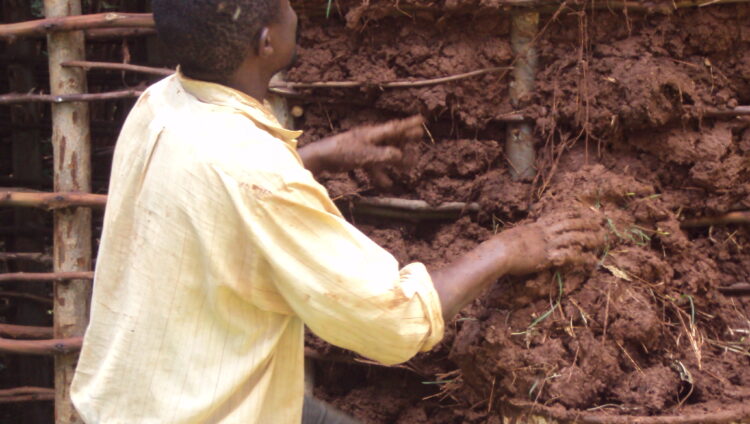
Hold on. Stop. This is something actually worth reading. Once upon a time, I had an architect come to visit my project of building with earth, in the early days. At the end of the visit, his main comment was: Wow! Shibero, ths is a pretty big project. There was no other comment or interest. He had been trained at a university in Nairobi. We are throwing the baby out with the bathwater. In our rush toward a singular, industrialized definition of progress, we are letting a priceless inheritance slip through our fingers: the highly sophisticated, time-tested building skills of our ancestors. For centuries, African builders possessed a profound, intuitive engineering mastery. They knew how to treat timber against termites using local flora, how to blend organic binders to create weather-resistant finishes, and how to manipulate thermal mass so that a structure naturally balanced its own temperature. These skills didn’t just work—they frequently outperformed modern industrial alternatives. Yet, because we have historically failed to rigorously document, blueprint, and pass down these practices, our children are growing up with zero knowledge of their own architectural heritage. Preserving these skills is not a romantic exercise in nostalgia; it is a critical safeguarding of human intelligence. Sad to say, when I visited a certain museum overseas, I saw a lot of African history, artifacts and other African skills highlghted. This was a Western museum! Why Preserving the Skill Matters When an architectural tradition is forgotten, we lose more than just shapes and designs—we lose a distinct body of science. The table below outlines the core attributes of the building heritage we must actively protect: Ancestral Building Science The Sophisticated Engineering Behind It Why It Must Be Preserved Microclimate Engineering Precise orientation and wall-thickness calculations that work with local wind currents and sun paths. Eliminates the need for high-energy, artificial mechanical cooling systems in tropical climates. Indigenous Material Chemistry Formulating structural mixes using localized clays, fibers, and natural stabilizers. Provides zero-cost, hyper-local building solutions that are entirely circular and zero-waste. Passive Structural Breathability Designing walls and roofs that naturally filter and exchange air without losing structural integrity. Prevents the toxic indoor air stagnation and mold common in poorly ventilated concrete structures. Communal Structural Geometry Modular structural frameworks designed to be erected safely through collective community labor. Preserves social cohesion and ensures building skills remain democratized rather than corporate monopolies. A Feasible, Ground-Up Education Framework Preservation doesn’t require massive national budgets or complex digital registries to begin. The most powerful way to keep this knowledge alive is to plant it directly into the minds of the next generation—starting with the classrooms, schools, and local university programs available right now. Our ancestors were not primitive builders—they were masterful sustainable engineers. It is our absolute duty to pass their formulas and methods down to our children, ensuring that the next generation proudly carries the blueprint of our identity into the future.
Read More
Unlearning the Colonial Classroom and Claiming Wisdom Beyond the Degree
Every morning across our cities, thousands of brilliant, highly credentialed people wake up, put on well-tailored clothes, and head to work that subtly drains their spirits. We are surrounded by the most academically qualified generation our continent has ever seen. We hold degrees, diplomas, and corporate titles that our grandparents could only dream of. Yet beneath the professional success, there is a quiet, aching question that keeps bubbling up: If I have done everything right, why am I struggling so much life situations and challenges? Let me be clear: I am not against education. I value learning deeply, and I hold degrees myself. Higher education opens doors and sharpens the intellect. But as I have journeyed through life—and through years of observing the world around me—I have learned some of my hardest, most profound lessons outside the lecture hall. Schooling never taught me how to navigate complex human relationships, how to weather unexpected life storms, or how to handle real-world situations with unflinching integrity when nobody is watching. The truth is, we were sold a promise that was never fully honest. From our earliest days in primary school, the rule was absolute: study hard, pass your exams, stack up your papers, and life will naturally unfold. Looking around today, it is clear that the system didn’t prepare us to live. It prepared us to comply. There is a vast difference between being trained and being educated. Most of what we experienced was institutional training. We were taught how to fit into structures built long before we arrived, how to meet someone else’s performance metrics, and how to chase a definition of success that originated far away from our own soil. Historically, true life skills were never taught through a blackboard or tested on a written exam. They were absorbed through deep, continuous engagement with those who had walked the path before us. We learned resilience, conflict resolution, and emotional maturity by sitting at the feet of elders, watching how they held space for communal grief and quiet reconciliation. We learned stewardship, discipline, and our place in the ecosystem through defined roles and daily responsibilities—tending cattle, cultivating crops, preparing meals, and caring for young ones. Transition rituals and rites of passage marked our growth, grounding us in the understanding that aging brought greater accountability to the collective, not just individual status. Knowledge was not an abstract concept you acquired for yourself; it was a living inheritance cultivated through relationships, story, and participation. When we traded those organic, intergenerational frameworks for a conveyor belt of standardized schooling, we lost the very spaces where character was forged. We began mistaking certificates for wisdom and institutional titles for personal identity. But what good is knowing how to manage a corporate budget if you don’t know how to navigate your own inner landscape, sit in quiet reflection, or honor the soil beneath your feet? So, how do we bridge this deep gap between the training we received and the wisdom we lost? Bridging it doesn’t mean burning our degrees or abandoning modern tools. It begins right in our homes, with how we raise the next generation and how we choose to show up: When the lifestyle you were trained to pursue leaves you exhausted and detached, you haven’t failed—the model failed you. Living intentionally starts the moment you are brave enough to step off that conveyor belt, honor the wisdom of those who came before us, show up fully for those coming after us, and decide that your soul’s clarity and cultural inheritance are worth vastly more than any certificate on the wall.
Read More