
Why We Must Save Africa’s Ancestral Building Sciences
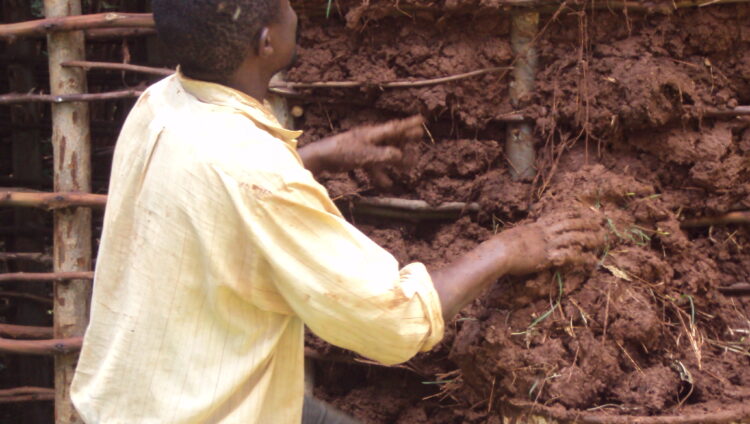
Hold on. Stop. This is something actually worth reading. Once upon a time, I had an architect come to visit my project of building with earth, in the early days. At the end of the visit, his main comment was: Wow! Shibero, ths is a pretty big project. There was no other comment or interest. He had been trained at a university in Nairobi. We are throwing the baby out with the bathwater. In our rush toward a singular, industrialized definition of progress, we are letting a priceless inheritance slip through our fingers: the highly sophisticated, time-tested building skills of our ancestors. For centuries, African builders possessed a profound, intuitive engineering mastery. They knew how to treat timber against termites using local flora, how to blend organic binders to create weather-resistant finishes, and how to manipulate thermal mass so that a structure naturally balanced its own temperature. These skills didn’t just work—they frequently outperformed modern industrial alternatives. Yet, because we have historically failed to rigorously document, blueprint, and pass down these practices, our children are growing up with zero knowledge of their own architectural heritage. Preserving these skills is not a romantic exercise in nostalgia; it is a critical safeguarding of human intelligence. Sad to say, when I visited a certain museum overseas, I saw a lot of African history, artifacts and other African skills highlghted. This was a Western museum! Why Preserving the Skill Matters When an architectural tradition is forgotten, we lose more than just shapes and designs—we lose a distinct body of science. The table below outlines the core attributes of the building heritage we must actively protect: Ancestral Building Science The Sophisticated Engineering Behind It Why It Must Be Preserved Microclimate Engineering Precise orientation and wall-thickness calculations that work with local wind currents and sun paths. Eliminates the need for high-energy, artificial mechanical cooling systems in tropical climates. Indigenous Material Chemistry Formulating structural mixes using localized clays, fibers, and natural stabilizers. Provides zero-cost, hyper-local building solutions that are entirely circular and zero-waste. Passive Structural Breathability Designing walls and roofs that naturally filter and exchange air without losing structural integrity. Prevents the toxic indoor air stagnation and mold common in poorly ventilated concrete structures. Communal Structural Geometry Modular structural frameworks designed to be erected safely through collective community labor. Preserves social cohesion and ensures building skills remain democratized rather than corporate monopolies. A Feasible, Ground-Up Education Framework Preservation doesn’t require massive national budgets or complex digital registries to begin. The most powerful way to keep this knowledge alive is to plant it directly into the minds of the next generation—starting with the classrooms, schools, and local university programs available right now. Our ancestors were not primitive builders—they were masterful sustainable engineers. It is our absolute duty to pass their formulas and methods down to our children, ensuring that the next generation proudly carries the blueprint of our identity into the future.
Read More