
We Need a New Conversation Around Marital Separation, and Healing in Africa
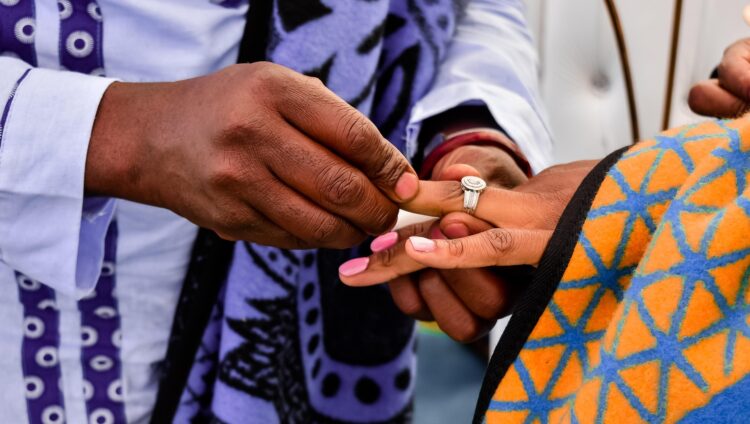
When we talk about marriage in Africa, our faces light up. We think of the colorful traditional weddings, the vibrant music, the coming together of two families- celebrated wth our traditions and culture. There is immense pride our communities feel. Marriage is beautifully woven into the very fabric of who we are, and these rich cultural traditions deserve to be preserved, respected, and fully celebrated. But because we hold the institution of marriage in such high esteem, we tend to deal with marital distress in absolute, suffocating silence. The problem isn’t our beautiful traditions—it is what happens after a union faces a crisis. For many of us, especially within the Christian community, the mere thought of a marriage failing feels like an unspeakable sin. So, what happens? We lock the doors, pull the curtains, and suffer in secret. We see many Christians quietly walking through divorce while fleeing the church out of shame, and just as many staying trapped in deeply broken, toxic dynamics because of the heavy stigma carried by our communities. It is time to pull back the curtain. If we truly want to heal African families who are quietly hurting in homes, we have to start telling the truth about what happens when a relationship breaks down, and how we can support the human beings within this sacred space. I speak from personal experience and from having stewarded a divorce care ministry in curches. The Wall of Silence Inside the Church When I was conducting research for my book, An African Woman’s Story of Divorce in Kenya, I wanted to see what kind of support systems churches actually had in place for families going through a breakdown. The initial reactions I got were incredibly telling: nobody really wanted to talk to me. There was a heavy, defensive wall of silence. Church leaders didn’t even want to acknowledge the issue. Why? Because the system carries a massive blind spot. They mistakenly believe that providing emotional and transitional support for a family in crisis is the same thing as promoting or supporting divorce. But also the very word ‘ divorce’ is still unspoken’. Let’s expose that myth right now: Supporting a family through a breakdown is NOT supporting divorce. It is supporting human beings who’d like to experience the compassion and love of God in their times of need. When a church shuts its doors to the reality of ‘marital failure’, it doesn’t stop divorces from happening; it just ensures that its members bleed in silence. By refusing to offer a landing pad for broken families, the church ceases to be a sanctuary and becomes a courtroom. The Trauma We Inherited and the Trap of Abuse Let’s be honest about why many couples find themselves in toxic cycles. In so many cases, the explosive arguments, the cold shoulders, or the control tactics aren’t new—they are generational echoes. Many couples are simply playing out scripts they saw in their original families growing up. We saw our parents fight, we saw our aunts endure, and we unconsciously learned that love must hurt to be real. But what happens when that dysfunction turns into abuse? Whether it is emotional, financial, or physical, the feeling of entrapment is agonizing. You want to leave to save your sanity, but you look at the community, you think of the church, and you feel entirely paralyzed. You are trapped between a system that tells you to “be patient and endure” (Tiisetsa, Hangana, or Uvumilivu) and a reality that is slowly breaking your spirit. Let’s challenge that system right now: enduring abuse is not a spiritual victory. God deeply values your safety, your dignity, and your wholeness. A healthy community cannot be built on broken, terrorized individuals living unde the same roof in the name of marriage. The Forgotten Victims: What About the Children? In the middle of all this adult warfare, there is a heartbreaking truth we have to confront: we are destroying our children. When couples are caught up in the pain, anger, and bitterness of a failing marriage, they often become completely blind to how their fighting impacts the little eyes watching them. We yell, we slam doors, we treat each other with deep contempt, and we completely forget that our children are absorbing every single ounce of that trauma. They are learning how to be anxious, fearful, or angry adults right in our living rooms. Worse yet, look at how our society handles a marital split. It is treated entirely as an adult thing. The parents get lawyers, the aunts and uncles call meetings, the pastors offer counseling for the husband and wife—but there are absolutely no services or considerations for the children. They are left to process the collapse of their entire world completely alone. Because there is no professional or emotional support tailored for them, children often end up being weaponized. It happens all the time in African families: parents start using the children to spy on each other, to pass toxic messages, or as tools to punish the other parent. We force our kids to choose sides, tearing their hearts in two and forcing them to carry adult burdens they were never meant to bear. Redefining the Ending: From Shame to Wholeness Challenging the current stigma does not mean we are against marriage. We love marriage! But we must advocate for truth and health. When a marriage has completely broken down and high risk of violence and emotional and phyisical harm – it can no longer be a place of safety and mutual love, navigating a transition with dignity is not a failure of faith. In fact, shielding your children from a chronically conflicted, toxic home and choosing a peaceful, managed separation is an act of profound love and leadership. Children thrive far better in two separate, peaceful homes than in one war zone. The African church and our broader communities have a beautiful opportunity to evolve. Instead of standing in judgment or hiding behind defensive silence, we can
Read More
The Silent Hurt Driving Our Children to the Edge
If you walk into many public boarding schools across the continent today, you will notice something deeply troubling. The high walls, and the rigid, unyielding routines don’t feel like a sanctuary for education. They feel like a detention center. In the wake of devastating tragedies like the Utumishi Girls Academy fire, the public conversation always takes a predictable route. We talk about “spoiled children,” a “lack of discipline,” and the need for stricter punishments. I couldnt beleve it, when i heard one indiviual in educationin Kenya – after this awful tragedy at Utumishi Girls academy – doare to talk about introducing ‘canning’ back in schools. Something that has been happening for the longest time. But this lazy narrative completely ignores a massive, bleeding wound in our education system: the quiet, daily emotional abuse of our children. From my own deep research into student unrest, the truth is glaringly clear. Our children are not burning schools because they are inherently malicious. They are burning them because they are angry, terrified, and utterly helpless. Now, before we go any further, I want to say something very important. This is not a blanket condemnation of every single school in Kenya. We have incredible public and private schools in this country led by amazing, selfless principals and loving teachers who protect our children daily. But we cannot hide behind the exceptions. The hard truth from research and our current headlines is that this “bootcamp” culture and silent frustration are an overwhelming reality in the majority of our public boarding institutions. When Schools Become Battlefields The public school system has become a breeding ground for trauma. Many children are already coming from fragile backgrounds, dealing with poverty, neglect, or domestic friction at home. They enter school hoping for a safe space to grow, but instead, they are met with systemic hostility. Overcrowded dormitories, poor sanitation, and extreme academic pressure create a baseline of constant physical and mental stress. But the heaviest blow comes from the culture of authority. Teachers, administrators, and staff—overworked, underpaid, and drowning in their own personal life stresses—frequently turn the classroom into a battleground. They use their power to humiliate, intimidate, and break the spirits of the children in their care. Instead of mentors, these authorities become the enemies of the child’s well-being. When a student tries to complain about basic human needs—like terrible food, sickness, or mental exhaustion—their voices are completely shut down. There are no channels for open communication, no trusted welfare systems, and a severe shortage of professional counselors. The institution effectively becomes a closed, suffocating world where the child has zero agency. Separating Adult Stress from Child Care We must say it clearly: our children are absorbing our adult frustrations. When a teacher brings financial anxiety, marital problems, or career stagnation into the classroom and takes it out on vulnerable teenagers, it is a form of institutional abuse. As adults, we must learn the vital boundaries of emotional maturity. We must separate our personal hardships from the way we interact with children. It is our job to absorb the shocks of life, not pass them down to a generation that doesn’t have the psychological tools to process them. When we fail to do this, we turn schools into pressure cookers, and arson becomes the student’s desperate language of protest. The Road to Healing: Intentional Living for the Masses Fixing this national emergency requires a complete re-imagining of what a school should be. We must demand an education system that values emotional safety as much as it values mean scores and high grades. This is where intentional living comes in for the wider community. We must actively choose to listen to our children. We need to build homes and school environments where children are seen as human beings who deserve representation, respect, and an emotional safety net. Let us stop treating our youth like cogs in an academic machine. By choosing presence, open communication, and soft empathy over rigid power and control, we can dismantle the bootcamp culture and give our children their sanctuaries back.
Read MoreThe Liquid Trap: Why What You Don’t Know About Alcohol is Killing Our Communities
We need to be honest: many of us are not okay. Across Africa, alcohol has quietly shifted from a social ritual to a survival tool. We call it “relaxing,” but for an increasing number of Africans, it is an escape fueled by a profound education gap. Most of us are drinking substances we don’t truly understand, walking blindly into a trap that is claiming lives every single day. The Staggering Reality: Africa by the Numbers The scale of this issue is no longer a secret. Recent data from the World Health Organization (WHO) and Dateline Health Africa highlight a growing burden: The Biological Illusion: The “Stress” Lie Most people drink to “unwind,” but science shows alcohol is a chemical deceiver. The Specific Toll on Women: A Biological Warning Biologically, women are at a distinct disadvantage when it comes to alcohol. The Education Gap: What We Don’t Know In many communities, we lack basic alcohol literacy. We often don’t know: How to Support a Relative or Friend In our Ubuntu culture, we are our brother’s keeper—but that means keeping their potential, not their addiction. Stop Enabling: Do not cover for their mistakes. They must feel the weight of their choices to desire change. The Sober Window: Speak to them only when they are sober and the consequences of the night before are fresh. Avoid Accusations: Use “I” statements, such as “I am worried about your health,” rather than “You are a drunk.” Stop Enabling: Do not cover for their mistakes. They must feel the weight of their choices to desire change. The Moment of Choice: Breaking the Silence If you have read this far, the veil of ignorance has been lifted. You now know what alcohol is doing to your brain, your heart, and your community. We must ask ourselves: Will you continue to choose the bottle, or will you choose your life and the lives of your family? There is no shame in a celebratory drink in moderation, but we must be honest about where the line is. When the drink stops being a choice and starts being a requirement—when it starts slowly “unlivenning” your spirit and your health—it is time to wake up. We are harming ourselves in the name of “strength,” but true strength is found in facing our reality sober. What You Can Do Today Where to Find International Help Coping is not healing. If your “remedy” is leaving you—and those who love you—feeling worse, it isn’t medicine. It’s a poison. It’s time to choose life.
Read MoreThe Weight of Unforgiveness
Have you ever felt like a dagger in your heart when someone wronged you? Let’s be real. We’ve all been there. Maybe it was that time your bestie completely forgot about your big day. Maybe your dad just didn’t understand why you chose that career path, or perhaps it was the painful memories from school when you were picked on. And of course, there’s nothing like the pain that comes from betrayal by someone you share your life with. Be it a big incident or just a tiny slip, getting hurt is a universal experience. When we’re hurt, especially by those dear to us, it’s like an emotional storm brews within us. We feel rejected, scared, betrayed, or just downright insecure. Just like how a tiny cut can get seriously infected if we don’t treat it right, these emotional cuts can get infected too. They can fester with resentment, bitterness, and thoughts of revenge. Instead of helping ourselves heal with a dose of forgiveness, sometimes we unknowingly sip on the poison called unforgiveness. So, what is unforgiveness? Imagine holding onto a balloon filled with anger, resentment, and all those nasty emotions. That’s unforgiveness. It’s when we can’t let go of the pain someone caused us. Instead of healing and moving on, we keep replaying it in our heads, feeling that anger and hurt all over again. And just like any wound that doesn’t get the care it needs, with time, it doesn’t get better—it only gets worse. Imagine lugging around a massive backpack everywhere you go. At first, it might seem manageable, but as days turn into weeks and weeks into months, that bag becomes unbearably heavy. That’s what unforgiveness is like – a constant, heavy weight on our souls. And the longer we ignore it, the deeper it roots, pulling us down. Ladies, unforgiveness? It’s toxic. We’re feeding our souls with something that’s slowly poisoning us from the inside. But what does it do to us? Let’s dive into the negative effects of unforgiveness. So, diving right back in—unforgiveness? It’s like a whirlwind of chaos inside us. Picture it: an emotional hurricane that tosses up stress, anxiety, depression, insecurity, and a heap of fear. And beneath all of that? A heart that’s turned stone-cold. You see their face or even just hear their name, and suddenly you’re reliving all those emotions of anger, resentment, and bitterness. It’s like a never-ending replay of a painful past. And sometimes, the hurt takes over so much that we lose the zest for life. Sound familiar? Imagine your mind as a room, and unforgiveness. It’s like that oversized, obnoxious piece of furniture that takes up all the space, making it difficult to breathe. You replay that painful moment, dissecting every word, every gesture, like a film critic analyzing a movie. And maybe you’ve caught yourself crafting the perfect confrontation speech or daydreaming about some poetic justice. And, ugh, when we get caught in that loop? It’s not just about the current heartache. Suddenly, every bad memory from the past wants a starring role. It feels like we’re trapped in this twisted cinema of our own making. When we’re draped in unforgiveness, everything looks different. The world seems like a stage where every misstep feels like a scene directed against you. You start to walk on eggshells, expecting not just the one who hurt you, but everyone, to let you down. Before you know it, that pain isn’t just an emotion; it’s become your entire persona. And, ladies, it doesn’t stop there. Holding onto grudges isn’t just harmful to us; it’s also not our most glamorous side. Maybe you’ve found yourself ranting about that person one too many times or stretching the truth to gain a few sympathetic nods. And those passive-aggressive vibes, the silent treatments, or maybe the petty jabs? Not the best accessories we could choose. Revelling in someone else’s misfortunes or plotting revenge? It’s like we’re donning a cloak of negativity. Picture unforgiveness as a spill of red wine on a white carpet; it spreads, staining everything in its path. Maybe your partner or colleagues are tired of that same old rerun, or perhaps your friends are starting to keep their distance. And, let’s be real: it’s hard to share love and warmth when there’s a chill in our hearts. That distrust? It creates a wall between and our loved ones. It’s like wearing armour 24/7 because we’re scared of getting hurt again. The cherry on this not-so-delicious cake? Unforgiveness doesn’t just tug at our heartstrings; it messes with our health, too. Studies have linked it to high blood pressure, a weaker immune system, sleepless nights, lingering pain, and even heart troubles. And get this: because of its damaging effects, cancer treatments are now including forgiveness exercises to help patients heal. Sisters, let’s reclaim our space, our health, and our hearts. It’s time for a spring cleaning of the soul!
Read More